Introduction
Multisystem inflammatory syndrome in children (MIS-C), a post-infectious inflammatory response to the SARS-CoV-2 infection, shares features with Kawasaki disease (KD). US and European data have demonstrated declining MIS-C rates following widespread population immunity, changing variants of virus, and the introduction of COVID-19 vaccines. Vaccinations in Arab countries were limited. This survey describes temporal trends in MIS-C and KD cases across Arab countries during the pandemic peak and after easing restrictions.
Methods
We distributed a cross-sectional, online survey using MICROSOFT Forms to the KAWARABI investigators. Respondents reported aggregated data on encountered MIS-C and KD cases as categorical estimates (0, 1–4, 5–9, or ≥10 cases) during predefined time periods (2020, first and second halves of 2023 (2023H1 and 2023H2), and 2024). The survey also assessed the presence of national SARS-CoV-2 vaccination programs. Data was described as proportions and percentages.
Results
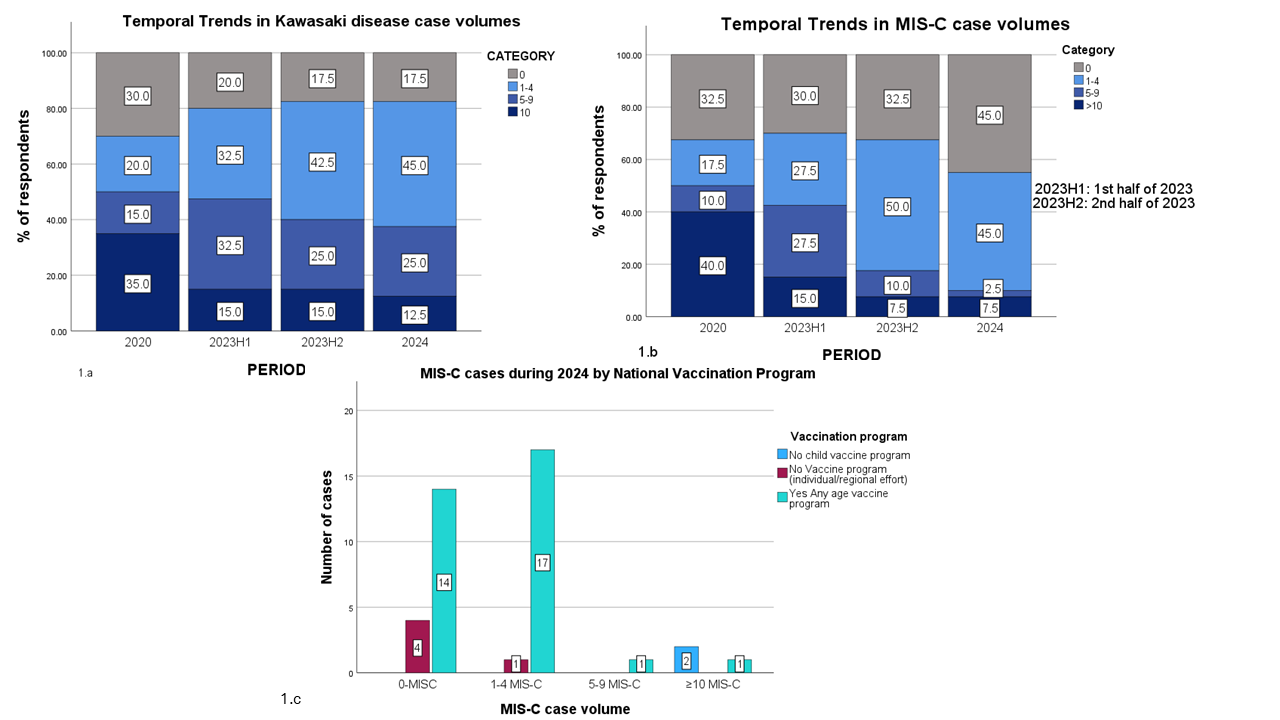
40 participants from 13 Arab countries responded. 22/40 (55%) were pediatric cardiologists. Higher KD case volumes were reported in the first half of 2020, with 35% of respondents reporting ≥10 cases. This proportion declined over time, with 15% and 12.5% reporting ≥10 cases in 2023 and in 2024 respectively. Despite a sharp decline over time in volume load, MIS-C cases continued to be reported, with 7.5% of respondents still reporting ≥10 cases in both 2023H2 and 2024, down from 40% in 2020 and 15% in 2023 H1. 55% of respondents reported MIS-C cases in 2024. 5/40 (12.5%) reported the absence of a national SARS-Cov2 vaccination program and 2/3 respondents with ≥10 MIS-C cases in 2024 were from countries with a minimum age limit of 12–18 years for vaccination in children (Figure 1.). 75% reported a transient increase in rates of dilated cardiomyopathy.
Conclusion
MIS-C and KD cases declined over time in the Arab region, particularly MIS-C, consistent with U.S. and European trends suggesting importance of widespread population immunity, and despite changing variants of virus as contributing factors worldwide. Persistent MIS-C case burden was seen in a small subset of countries, particularly those with missed opportunities for pediatric age vaccination thresholds. This highlights the importance of continued regional surveillance.