Introduction:
Kawasaki disease (KD) is an acute systemic vasculitis that may lead to coronary artery aneurysms (CAA), which represent the main determinant of long-term cardiovascular risk and put KD as the leading cause of acquired heart disease in children in high-income countries. Despite improved outcomes with early first-line therapies and dynamic risk stratification based on coronary Z-scores, long-term follow-up strategies remain heterogeneous, particularly in patients showing progressive CAA regression.
Methods:
We conducted a single-center, retrospective study including pediatric patients with complicated KD followed at Bambino Gesù Children’s Hospital (Rome) between 1999 and 2024.
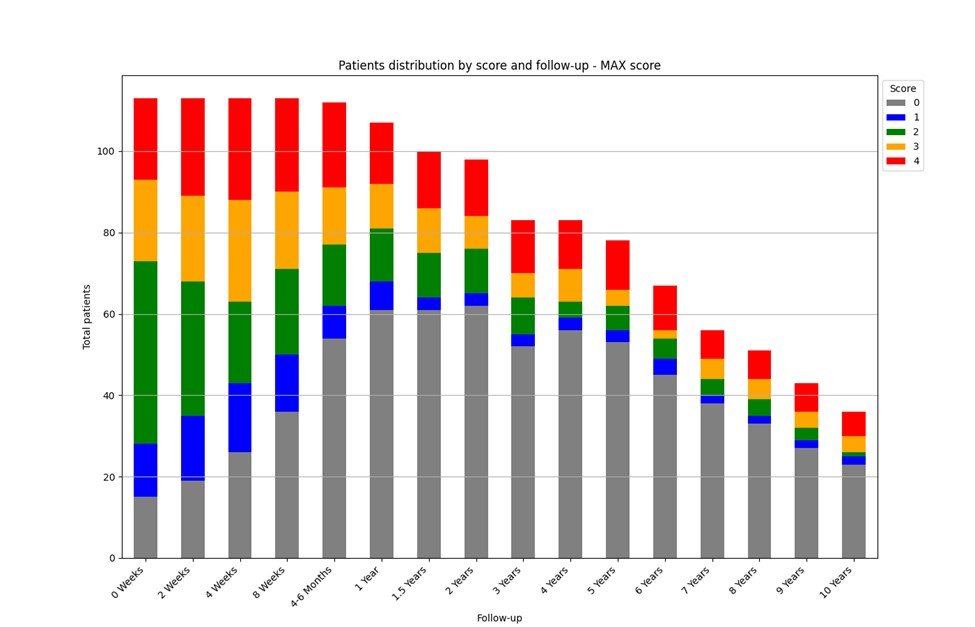
Coronary severity was assessed for each patient during the follow-up using several indices, such as MAX SCORE, defined as the highest Boston Z-score among coronary branches at echocardiography.
The distribution and timing of cardiac computed tomography (CT) and exercise stress testing (EST) during follow-up were analyzed in relation to CAA severity, using scores such as 1-YEAR MAX SCORE as variables.
Results:
Among our 502 KD patients, 122 of them (24.3%) developed CAA and 113 were included in the analysis, with a marked male predominance (3.5:1). Multivessel involvement was observed in 72% and follow-up ≥10 years was available for 31.9%. Most changes in CAA severity occurred within the first year after disease onset, with complete CAA regression in 76.1% of patients. Conversely, 53% of patients with MAX SCORE > 10 at 12 months from disease onset showed persistent coronary involvement.
In our cohort, EST (164 tests in 40 patients) was almost universally negative and prescribed regardless of CAA severity, whereas CT (47 exams in 35 patients) was preferentially performed in higher-risk patients. Test prescriptions correlated more closely with early CAA severity than with their status over time.
Discussion:
Early CAA severity (1-YEAR MAX SCORE) appears to be a reliable predictor of long-term coronary outcomes and influenced long-term follow-up strategies in our cohort. The low diagnostic yield of EST suggests potential overuse, while cardiac CT provides valuable anatomical information, supporting a more risk-based long-term follow-up approach for patients with complicated KD in order to reduce the costs of prolonged follow-up but still maintaining significant safety margins for patients.
Long-term coronary outcomes and follow-up after Kawasaki Disease: insights from a 25-year follow-up cohort
A. M. (Musolino)