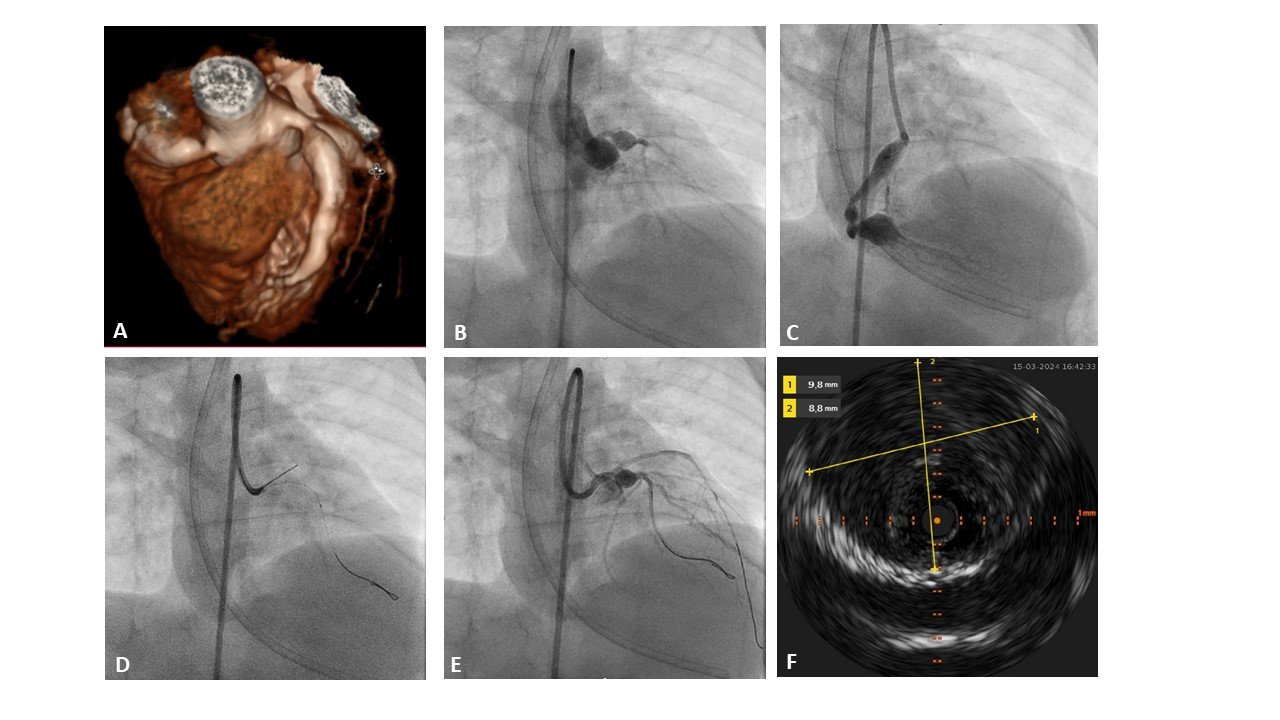
Introduction – 9-month-old infant (9 kg) with a history of a delayed diagnosis of Kawasaki disease with major coronary artery aneurysms of the left and right coronary artery (Figure A-C), was admitted to the PICU for systemic fibrinolysis. This was due to a large thrombus in the aneurysm of the proximal LAD, despite being on triple anticoagulation therapy (ASA, clopidogrel, low-molecular weight heparin). The initial systemic treatment was largely successful in resolving the thrombus. However, after two weeks, signs of acute ischemia emerged (ECG changes and elevated cardiac enzymes). Echocardiography and CT-A suggested a possible complete occlusion of the LAD.
Methods and Results – The infant was transferred to the catheterization laboratory for further diagnostics and percutaneous coronary intervention. Angiography confirmed occlusion of the proximal LAD by a large thrombus, with no collateral supply of the distal LAD (Figure B). Due to the child’s small size, it was not possible to safely position a 5Fr guiding catheter in the ostium of the left main coronary artery, so it was left in the left coronary cusp. Subsequently, coronary balloon angioplasty with 1.5 mm and 2 mm coronary balloons was performed, resulting in revascularization of the LAD (Figure D-E). Endovascular ultrasound (IVUS) revealed large thrombus burden in the aneurysmatic segments of the proximal LAD (Figure F). Stents were not implanted given the small size of the non-diseased coronary artery system, the risk of stent thrombosis and at later stage possible stent malposition. By restoring antegrade flow in LAD anticoagulants and interleukin-inhibitor therapy for Kawasaki disease was more effective. In the following days the child’s condition improved, with normalization of the ECG and cardiac enzymes. Surveillance imaging (CT-A and echocardiography) confirmed the patency of the LAD.
Conclusion – Performing percutaneous coronary artery intervention in infants is challenging due to the small size of their coronary arteries, their anatomy, and the need for relatively large (adult-sized) materials to safely conduct the procedure. Especially treatment of thrombotic events in infants with large coronary aneurysms in Kawasaki disease require a multi-disciplinary approach, with close collaboration among (paediatric) interventional cardiologist, rheumatologists and haematologist.
Kawasaki disease with giant Coronary Artery Aneurysms
ND Hahurij