Background: Bacillus Calmette–Guerin (BCG) scar reactivation (BCGitis) is a distinctive clinical sign reported in Kawasaki disease (KD), particularly in infants, yet the evidence base remains scarce and dispersed across the literature.
Objective: To summarize the epidemiology, timing, clinical correlates, and coronary outcomes associated with BCG site reactivation in KD.
Methods: We conducted a PRISMA-ScR–guided scoping literature review (search through November 2025) of studies describing BCG site reactivation in KD. Eligible publications spanned from 1997 to 2024. Data were synthesized descriptively across retrospective cohorts and case reports or series.
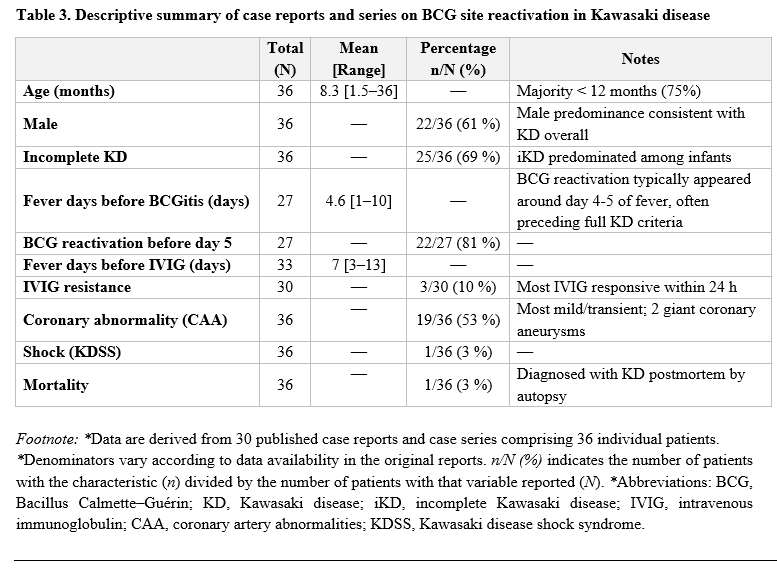
Results: Forty studies were included (10 retrospective cohort studies; 30 case reports or series). Publications were concentrated in the WHO Western Pacific Region, with fewer reports from the Americas and South-East Asia and limited representation from Europe and the Eastern Mediterranean regions. Across cohorts, BCGitis was most frequently described in infants and young children (<2 years, often <6-12 months) and was commonly associated with earlier clinical recognition and earlier intravenous immunoglobulin (IVIG) administration. Across nine cohorts, the mean prevalence of BCGitis was 33.1% (range 11.8–49.9%). Coronary artery abnormalities (CAA) rates were often lower in BCGitis groups, but differences were not statistically significant, and BCGitis was not an independent predictor of CAA among cohort studies reporting multivariable analyses. Across 36 individual patients described in case reports/series, the mean age was 8.3 months (range 1.5–36), 61% were male, and incomplete KD was common (69%). When timing was reported, BCGitis appeared early (mean 4.6 days of fever; 81% before day 5), often preceding full diagnostic criteria. Most cases were IVIG responsive, with IVIG resistance reported in 10% of cases. CAA were reported in 53% of cases (predominantly mild/transient), with two giant aneurysms among 36 patients; shock and mortality were rare.
Discussion/Conclusion: BCGitis is a useful early clinical clue to KD in BCG-vaccinated infants, particularly in incomplete presentations, and may support earlier diagnosis and timely treatment. Increased clinician awareness and incorporation of BCG scar changes into diagnostic algorithms may improve recognition of incomplete KD. Future prospective multicenter studies should standardize reporting and evaluate the incremental diagnostic value of BCGitis.
BCG Scar Reactivation (BCGitis) in Kawasaki Disease: A Scoping Literature Review
D Khreis