Introduction: Kawasaki disease (KD) is an acute febrile medium-sized vessels vasculitis that predominantly affects young children. Intravenous immunoglobulins (IVIG) remain the only evidence-based therapy proven to reduce the incidence of coronary artery aneurysms (CAA). However, 10% to 20% of patients fail to respond to IVIG and are at increased risk of developing CAA. The management of IVIG-resistant KD is not standardized and relies on additional IVIG doses, corticosteroids, or tumor necrosis factor–α inhibitors. Recent clinical trials and case reports have suggested a potential therapeutic role for the interleukin-1 receptor antagonist anakinra (ANK).
The aim of this paper is to systematically review and critically appraise the available clinical evidence on the use of ANK in the treatment of IVIG-resistant KD, with a focus on treatment indications, timing, dosage, efficacy on fever, systemic inflammation and coronary artery outcomes, and safety.
Methods: a systematic literature search was conducted across PubMed, Embase, Web of Science, Cochrane Library, Emcare, Academic Search Premier, and Google Scholar from inception to October 9, 2025, following PRISMA 2020 guidelines. Eligible studies included any design reporting KD patients treated with ANK and describing treatment outcomes. Data were extracted independently by two reviewers and synthesized descriptively.
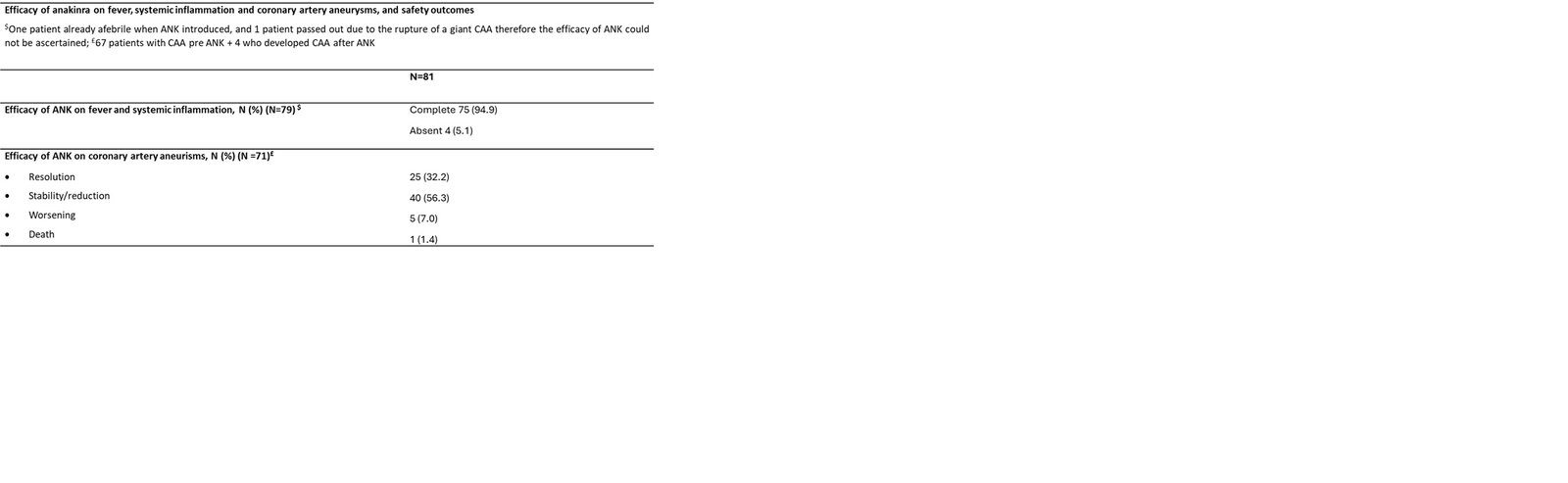
Results: Thirty-two publications (31 identified through database search and 1 by cross-referencing) describing 81 patients were included. Most reports were single cases or small series, with two early-phase clinical trials. ANK led to complete resolution of fever and systemic inflammation in 94.9% of patients and to stabilization or regression of CAA in 83% (complete CAA normalization in 32%). Adverse events were rare and generally mild. No safety concerns were identified.
Discussion: ANK appears to be an effective and well-tolerated option for refractory KD, particularly in controlling systemic inflammation, whilst more data are needed to assess its efficacy on CAA. While these findings are encouraging, evidence remains limited to case-based reports and small open-label trials. Larger randomized studies are warranted to define optimal timing, dosing, and long-term cardiac outcomes.
Anakinra in Kawasaki Disease: A Systematic Literature Review
C Matucci-Cerinic