Kawasaki Disease (KD) is a systemic vasculitis primarily affecting young children and is the leading cause of pediatric acquired heart disease in developed countries. Despite extensive research over the past five decades, the etiology of Kawasaki Disease remains elusive, with the causes of its incidence patterns still unexplained.
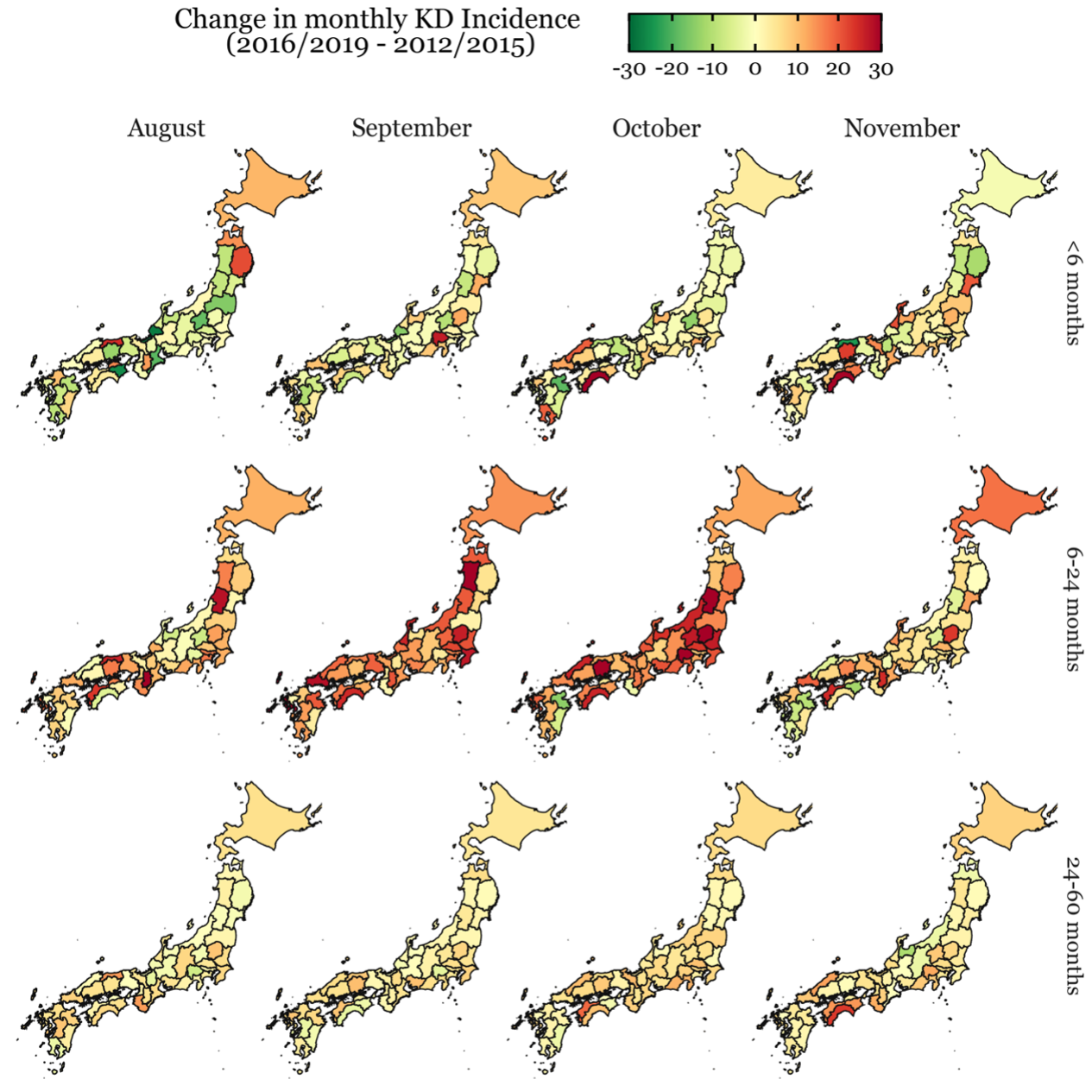
In this cross-sectional time-series study, we explore the intricacies of KD’s seasonality using data from Japan—the country with the highest worldwide incidence of KD—spanning over 20 years (2000 to 2019). Our focus is on examining how these seasonal patterns manifest across different age groups and regions. By extracting and isolating the temporal signals from age-stratified time-series data, we identify not only a marked distinction between the seasonal signals of different age groups but also an abrupt desynchronization between younger and older children after 2016. This shift is particularly evident in the under-2 age group, where we observe a strong change in seasonality, with a new autumn peak that is consistent across most regions in the country.
These findings suggest a shift in the interplay between environmental factors triggering the disease and the specific exposure windows for children under 2, pointing towards a potential nationwide change that could help explain the triggers behind this mysterious vasculitis. The potential links to changes in climate, pollution, infectious diseases, vegetation and behavioural patterns are further explored in the search for associations.
Comparison separating the data before and after 2016 is also made with 4 viral diseases that commonly show seasonal patterns and are common pathogens affecting children, namely: Influenza, Hand-Foot-Mouth Disease (HFMD) (caused by either Coxsackievirus or Enterovirus), Herpangina (Coxsackievirus A and B) and Respiratory Syncytial Virus (RSV).
Seasonality changes may hold essential clues to KD etiology: An age-stratified spatiotemporal analysis in Japan
AF Fontal